
Published:12 October 2024
In the fast-paced digital world, speed and reliability are key factors in determining the success of a website. One of the best ways to ensure optimal performance is by using a Content Delivery Network (CDN). Whether you run a small blog or a large e-commerce site, a CDN can significantly enhance your website’s speed, user experience, and even SEO rankings. In this post, we’ll break down what a CDN is, how it works, and why it's essential for modern websites.
A Content Delivery Network (CDN) is a network of geographically distributed servers that work together to deliver web content, such as images, videos, stylesheets, and scripts, to users based on their location. The main goal of a CDN is to reduce the distance between the server and the user, thereby improving the website's loading speed and performance.
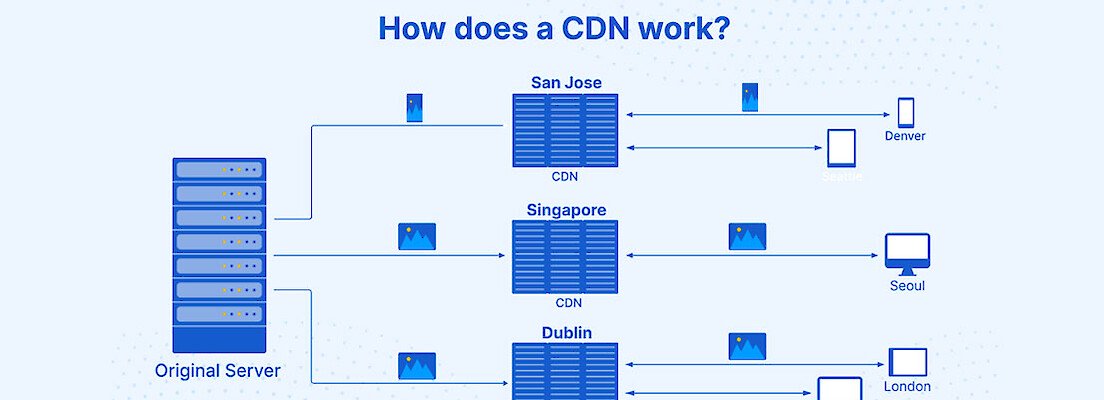
Instead of serving your website's content from a single server (which might be far from the user), a CDN distributes your content across multiple locations around the world, known as edge servers. When a user accesses your website, the CDN will deliver the content from the nearest server, reducing latency and enhancing load times.
A CDN acts as a middle layer between your website’s origin server and the users accessing your content. Here’s how it typically works:
Content Distribution: When your website content is uploaded, the CDN replicates and caches it across its global network of servers.
User Request: When a user visits your site, the CDN identifies the user’s geographic location and routes the request to the closest server in the CDN network.
Content Delivery: The CDN delivers cached copies of your content from the nearest server, ensuring faster load times compared to a single, centralized server.
Updates and Cache Refreshing: The CDN continuously updates and refreshes its cache to ensure users are served the most current version of your content.
Speed is a critical factor for user engagement and search engine rankings. A CDN reduces the physical distance between the user and the server, improving page load times by serving content from the closest available server. The faster a website loads, the more likely users are to stay and engage.
CDNs help reduce bandwidth consumption by caching static content like images, scripts, and stylesheets. This decreases the load on your origin server, reducing bandwidth costs, especially during periods of high traffic.
A single server can become overwhelmed with traffic, especially during spikes or DDoS attacks, leading to downtime. CDNs distribute the load across multiple servers, ensuring your website remains accessible even during traffic surges or server failures.
Many CDNs offer built-in security features, such as DDoS protection, web application firewalls, and Secure Socket Layer (SSL) encryption. These features help protect your site from malicious attacks while maintaining fast performance.
Google uses website speed as one of its ranking factors. A fast-loading website delivered via a CDN not only improves user experience but can also boost your search engine rankings. Additionally, CDNs ensure your content is delivered to global audiences more efficiently, which can improve your reach.
For businesses targeting a global audience, a CDN is crucial. It ensures that users from different parts of the world experience the same fast, reliable performance, no matter how far they are from your origin server.
While a CDN offers significant advantages, it’s especially beneficial in the following scenarios:
High Traffic Websites: If your website experiences high traffic volumes or traffic spikes, a CDN can ensure your site remains fast and available.
Global Audience: If you serve a global audience, a CDN ensures that users from various locations receive content quickly, regardless of their distance from the origin server.
Media-Heavy Content: Websites that host large files like images, videos, and downloadable resources can greatly benefit from a CDN, as it reduces the load on the origin server and speeds up content delivery.
E-Commerce Sites: Online stores require fast load times and constant uptime to provide a seamless shopping experience. A CDN helps ensure that product pages, images, and checkout processes are delivered quickly and reliably.
Several CDN providers cater to different needs and budgets, offering a range of features:
Cloudflare: One of the most popular CDNs, known for its security features like DDoS protection and free SSL.
Amazon CloudFront: A robust CDN integrated with AWS services, ideal for businesses already using Amazon's cloud infrastructure.
Akamai: One of the oldest and largest CDN providers, offering a vast network of servers and advanced security options.
Fastly: Known for its real-time content delivery and analytics, Fastly is popular among media companies and e-commerce businesses.
KeyCDN: A cost-effective option with global coverage, offering pay-as-you-go pricing, making it accessible for smaller websites.
A CDN is a powerful tool that enhances the performance, reliability, and security of your website. By distributing content across multiple servers worldwide, a CDN minimizes load times, reduces bandwidth costs, and ensures your site can handle traffic spikes without crashing. Whether you're running a small blog or a large-scale e-commerce platform, using a CDN can be a game-changer for improving user experience and growing your online presence.
If you haven’t implemented a CDN yet, now is the time to consider it. Faster, safer, and more reliable content delivery will give your website the competitive edge it needs in today’s digital landscape.